
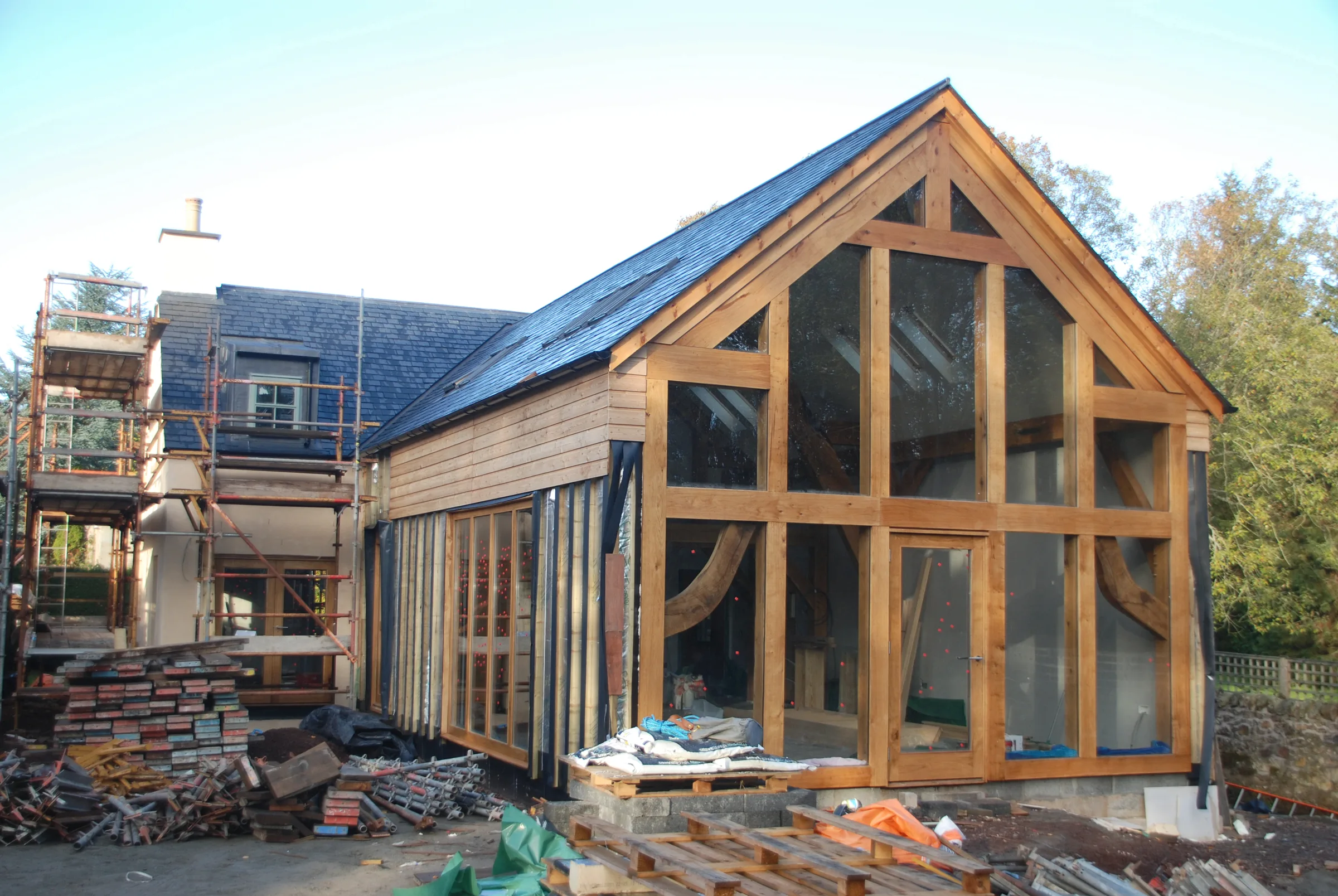
The three routes
1. Self-managed (trades-led). You act as project manager, hiring individual trades, buying materials and running the programme. The most involvement, the most potential saving and the most risk.
2. Main contractor. You appoint one contractor who takes responsibility for the whole construction. Where separately appointed, the design team or contract administrator may review valuations, certify payments, inspect work and administer variations in accordance with the agreed appointment and building contract. This is a common route for clients who appoint ED Design as their independent architectural designer; the builder is separately appointed and responsible for construction.
3. Turnkey (design and build). One company handles design, planning, construction and handover. You have a single point of responsibility, but usually less direct control over the design.
Each route allocates responsibility differently. Risk and cost certainty depend on the contract, specification, contractor capability, exclusions and change-control arrangements, not on the route's name. Obtain professional advice before choosing.

Side by side
| Factor | Self-managed | Main contractor | Turnkey |
|---|---|---|---|
| Your involvement | Very high, like a second job | Moderate: meetings and decisions | Low: milestone reviews |
| Cost | Depends on your time, skills and buying | Set by tender and the contract | Depends on the provider and scope |
| Cost certainty | Low unless tightly managed | Depends on the contract and exclusions | Depends on the contract and exclusions |
| Who carries most risk | You | Shared, as set by the contract | Shared, as set by the contract |
| Design control | Full | Full, through your own design team | Varies; often more limited |
| Contract | Separate trade agreements | A Scottish building contract, such as an SBCC homeowner contract | Design-and-build contract |
Contracts under Scots law
Building contracts in Scotland operate under Scots law. The Scottish Building Contract Committee (SBCC) publishes contracts for homeowners that set out the price, how payments are certified, retention and the defects period. Our guide to choosing a builder covers what to check before you sign.
In a design-and-build arrangement, the designer usually works for the contractor, not for you. Always be clear whose interests your design professional is protecting.
General guidance for Scotland, not legal, tax, financial or planning advice for your project. Rules change, so check current official guidance and take advice specific to your site before acting.