
Why is extending in Edinburgh different?
Three things shape almost every extension in the city:
- Conservation areas. The City of Edinburgh Council has 50 conservation areas, each with a character appraisal explaining what makes it special. Householder permitted development rights for extensions don't apply in conservation areas, so an extension there needs planning permission.
- Listed buildings. Many of the city's villas, terraces and tenements are listed. Extending a listed building needs listed building consent as well as planning permission.
- Flats. The council's quick guide to house extensions doesn't apply to flats, including four-in-a-blocks. Extending a ground-floor flat usually needs planning permission and the agreement of the other owners.
On top of that, the council's quick guide is clear that a Building Warrant is always required for an extension.
Choose someone with completed extensions in Edinburgh, experience of conservation areas and listed buildings, professional indemnity insurance and a written fee proposal. They don't have to be an architect: architectural technologists and designers prepare the same applications.
Do I need an architect?
No. In Scotland the title "architect" is protected for people registered with the Architects Registration Board (ARB), but the design and application work isn't reserved to them. The council's own quick guide notes that architects or architectural technicians can help with design, planning applications and Building Warrants. See architect, architectural designer or technologist.
Have they worked in Edinburgh's conservation areas?
In a conservation area, the council asks whether an extension preserves or enhances the character and appearance of the area. Ask the people you're considering:
- Which conservation areas have you designed extensions in?
- Have you read the character appraisal for my area, and what does it mean for my house?
- Would you suggest pre-application advice, and why?
- How would you approach materials: matching stone, or a clearly contemporary addition?
We explain the process in extending a home in an Edinburgh conservation area.
What if the house is listed?
Listing covers the interior as well as the exterior, plus boundary walls and outbuildings within the curtilage unless the listing says otherwise. Historic Environment Scotland's guidance expects an extension to be subordinate to the original building and usually placed on a secondary elevation. Ask whether the designer has prepared listed building consent applications, and how they handle the details and samples that conditions often require. See extending a listed building.
What if you live in a flat or tenement?
Ground and garden flats are some of the most common extension projects in Edinburgh, and some of the most involved. As well as planning permission, you will normally need:
- the consent of the other owners, under your title deeds and any deed of conditions;
- a structural design that respects shared walls, foundations and drainage;
- a Building Warrant that may cover fire separation and shared structure.
Ask whether the designer has extended flats before and how they dealt with neighbours and owners.
Can they show you comparable extensions?
Look at extensions similar to yours in scale, house type and setting. Ask how each one went through planning, whether there were objections, and what the conditions were. A reference from a past Edinburgh client is worth more than a polished brochure.
What practical checks should you make?
- Insurance: ask whether they hold professional indemnity insurance and what level of cover. ARB requires it of registered architects.
- Who does the work: confirm who leads your project and who prepares the drawings.
- Fees: ask for a written proposal with stages, exclusions and how changes are charged. See our fee guide and extension design fees in Scotland.
- Engineer: ask whether the structural engineer is included or separate.
- Appointment: get a written appointment before work starts.
How will neighbours be involved?
For a planning application, the council notifies neighbours itself, and they can comment. In a tightly built city, privacy, daylight and overshadowing are often the issues that matter most, so a designer who tests these early can avoid objections. Scotland has no equivalent of England's Party Wall Act, so if work affects a shared wall or boundary, or your builder needs access to a neighbour's land, you'll need the neighbour's agreement. Your title deeds may also contain relevant conditions, so take advice from your solicitor.
How long should you allow?
The statutory period for a householder planning application is two months, and listed building consent runs to a similar period, although applications that need negotiation or consultation can take longer. The Building Warrant follows. See how long an extension takes.
How we help
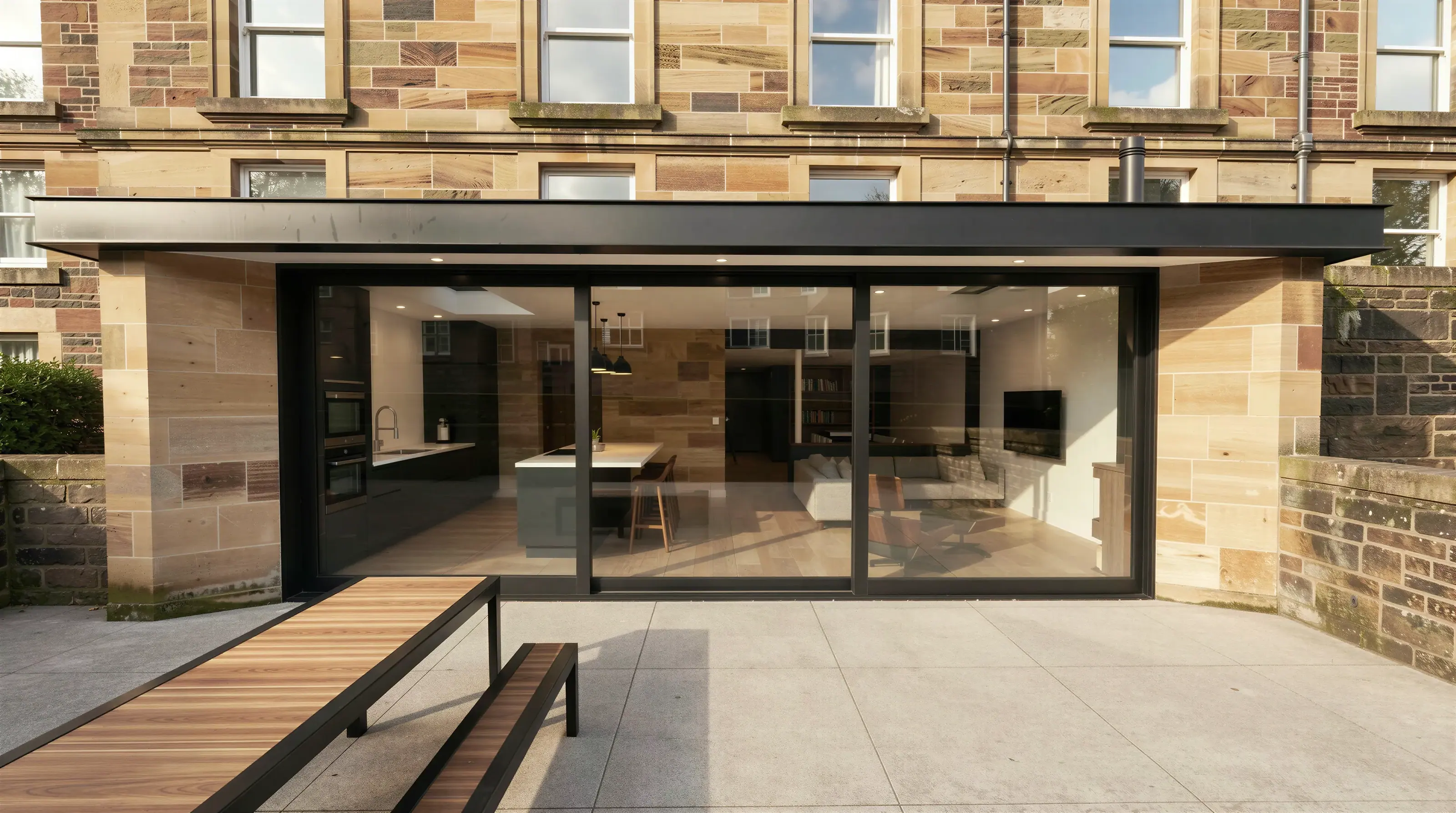
ED Design designs extensions in Edinburgh and across Edinburgh and the Lothians. Our Edinburgh work includes a garden room extension and two-car garage for a split, listed villa in a Merchiston conservation area, and a ground and garden flat renovation with a rear extension in Inverleith.
Sources: City of Edinburgh Council: conservation areas; City of Edinburgh Council: quick guide to house extensions; Historic Scotland: Managing Change in the Historic Environment, Extensions; Architects Act 1997, section 20. Last reviewed November 2026.
Questions
Do I need an architect for an extension in Edinburgh?
No. Scottish law doesn't require an architect for planning or Building Warrant applications. Architectural technologists and designers can prepare the same applications.
Can I extend my house in an Edinburgh conservation area without planning permission?
No. Householder permitted development rights for extensions don't apply in conservation areas, so you need planning permission.
How many conservation areas are there in Edinburgh?
The City of Edinburgh Council has 50 conservation areas, each with a character appraisal.
Do I need a Building Warrant for an extension in Edinburgh?
Yes. The council's quick guide to house extensions says a Building Warrant is always required for an extension.
Can I extend a ground-floor flat in Edinburgh?
Often, but it usually needs planning permission, the consent of the other owners under the title deeds, and careful structural design for shared walls and drainage.
General guidance for Scotland, not legal, tax, financial or planning advice for your project. Rules change, so check current official guidance and take advice specific to your site before acting.