
Who decides your application?
Inside the city boundary, Glasgow City Council is the planning authority. Many addresses people think of as Glasgow, such as Bearsden, Milngavie, Newton Mearns or Giffnock, are in East Dunbartonshire or East Renfrewshire, each with its own Local Development Plan. Every application is decided against National Planning Framework 4 (NPF4) and the relevant local plan.
Check which council covers the address, read NPF4 and that council's development plan, and check for conservation areas and listed buildings. In Glasgow, keep an eye on City Development Plan 2 as it moves towards adoption.
City Development Plan 2
Glasgow City Council is preparing City Development Plan 2 (CDP2) to replace the current City Development Plan. The council approved the Proposed Plan in May 2026, and the period for representations ran from late August to 18 November 2026. Until CDP2 is adopted, the current plan and NPF4 remain the basis for decisions, but the Proposed Plan shows the council's direction.
Neighbouring councils are also preparing new plans. East Dunbartonshire's evidence report for its third Local Development Plan completed the gate check in 2026, so check each council's website for the current position.
Conservation areas, tenements and listed buildings
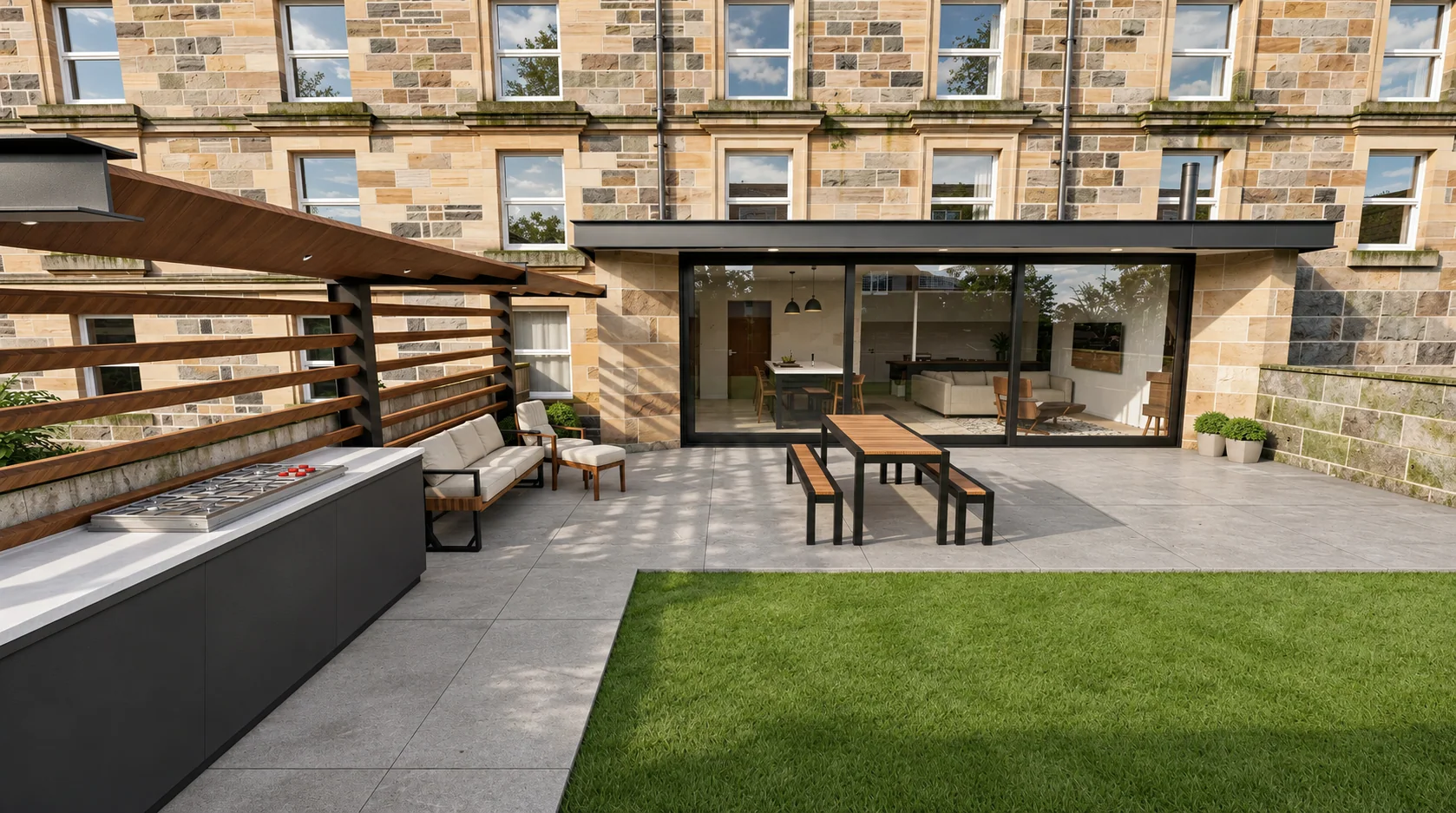
Large parts of the West End, the Southside and older suburbs are conservation areas, and Glasgow has many listed buildings. In a conservation area, permitted development rights are reduced, and the council looks closely at materials, scale and how a design responds to its street. Extensions to tenement and main-door flats raise their own questions about shared ownership and common parts. See extending in a conservation area for the general approach.
Plots and self-build in the city
True self-build plots are scarce in the city, so most new homes come from garden ground, gap sites or replacing an existing house. Each needs careful thought about neighbours, access and the character of the street. See building a house in your garden and replacement dwellings.
How to approach it
- Confirm the planning authority and any designations before you design.
- Use pre-application advice where the council offers it, especially in a conservation area.
- Show how the design responds to the street, neighbours and existing building.
- Plan for a Building Warrant alongside planning.
How we help
ED Design is an architectural design studio in Stirling, working across central Scotland including Glasgow and its neighbours. See our Glasgow page.
Sources: Glasgow City Council: City Development Plan 2, emerging plan; Invest Glasgow: City Development Plan 2 approved (May 2026); East Dunbartonshire Council: publication of the Glasgow CDP2 Proposed Plan; Scottish Government: development plan gate checks. Last reviewed November 2026.
Questions
Who decides planning applications in Glasgow?
Glasgow City Council inside the city boundary. Areas such as Bearsden, Milngavie, Giffnock and Newton Mearns are in East Dunbartonshire or East Renfrewshire, which have their own plans.
What is Glasgow City Development Plan 2?
Glasgow's new local development plan. The council approved the Proposed Plan in May 2026 and consulted on it until 18 November 2026. Until it is adopted, the current plan and NPF4 apply.
Can I extend a house in a Glasgow conservation area?
Usually, with planning permission. Permitted development rights are reduced in conservation areas, and the council looks closely at design and materials.
General guidance for Scotland, not legal, tax, financial or planning advice for your project. Rules change, so check current official guidance and take advice specific to your site before acting.