What is a steading conversion?
A steading is a group of traditional farm buildings, often stone-built around a courtyard, that once housed animals, carts and grain. Many are now redundant, and converting them into homes is one of the most established routes to a rural self-build in Scotland. The same principles apply to barns, mills, bothies, chapels and other traditional buildings that were never houses.
For planning, building regulations and tax, a conversion is treated differently from a new build. Understanding those differences early saves time and money.
You need planning permission for the change of use, often bat and structural surveys, and a Building Warrant. Builders can charge VAT at 5% on a qualifying conversion, which you can reclaim. Buying a steading is normally taxed as non-residential land for LBTT.
Do you need planning permission to convert a steading?
Yes. Converting a farm building into a house is a change of use, and the building work usually changes its appearance too. The good news is that national policy is supportive in principle. NPF4 Policy 17 supports new homes in rural areas that re-use redundant or unused buildings, provided the proposal is suitably scaled, sited and designed. Many councils also have their own guidance: Stirling Council, for example, published planning guidance on new uses for redundant rural buildings in February 2024.
Planners will usually want to see that:
- the building is genuinely redundant for its original use;
- it is capable of conversion without substantial rebuilding, which is why a structural survey is often needed with the application;
- the design keeps the character of the building, with new openings, rooflights and extensions kept in proportion;
- access, parking, drainage and garden ground can be provided without harming the setting.
If the steading is listed, you will also need listed building consent. See extending a listed building and housing in the countryside in Stirling.
Which surveys does a steading need?
- Measured survey: accurate drawings of the existing buildings, on which the whole design is based.
- Structural survey: the condition of the walls, roof structure and foundations, and how much can be kept.
- Bat survey: traditional farm buildings are often used by bats, which are European protected species. Councils normally need a survey before deciding the application, and NatureScot's standing advice explains when. Surveys can only be done in the active season, roughly May to September, so start early. Works affecting a roost need a licence from NatureScot.
- Breeding birds and other species: barn owls and swallows are common in steadings.
- Drainage: most rural steadings need a private treatment system, so ground conditions matter.
- Services: water and electricity may be some distance away. Get early quotations.
What does the Building Warrant require for a conversion?
A conversion to a house needs a Building Warrant. The building regulations recognise that an existing building can't always meet every standard for a new build. Some standards must be met in full, and others must be met as far as is reasonably practicable, and never made worse than before. The Building Standards Technical Handbook explains which, in its section on standards applicable to conversions.
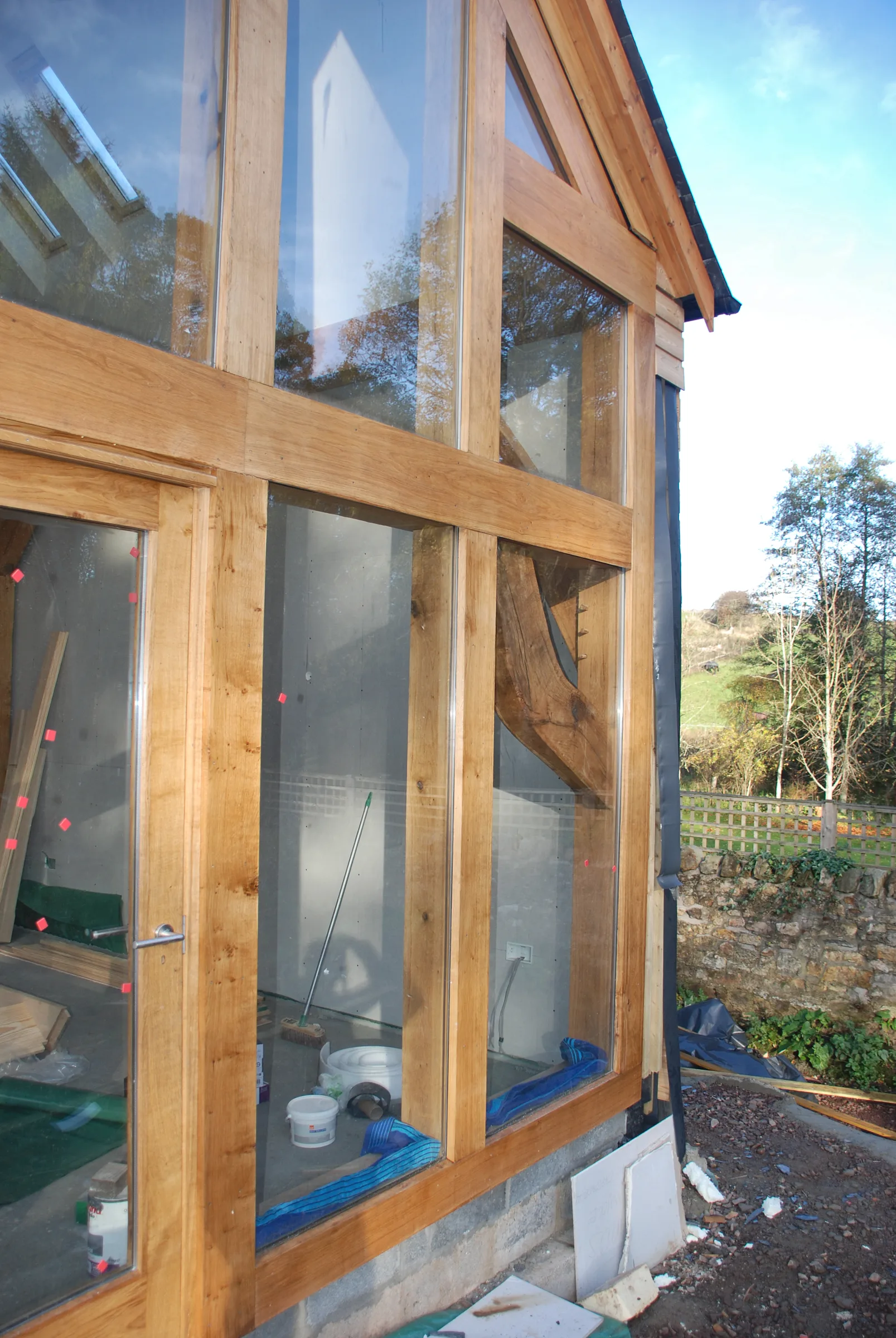
In August 2026 the Scottish Government and Historic Environment Scotland published an updated Guide to Conversion of Traditional Buildings, which applies to applications from 10 August 2026. It covers how to balance compliance with conservation in areas such as insulation, ventilation, fire safety and damp. Traditional solid walls behave very differently from modern construction, and the wrong insulation can trap moisture.
The New Build Heat Standard also applies to some conversions where the warrant was applied for on or after 1 April 2024, so plan for a heat pump or other clean heating. See do new homes need a heat pump?
How does VAT work on a steading conversion?
VAT is one of the main differences from a new build. A builder converting a non-residential building into a home can charge VAT at the reduced rate of 5% on their services and the materials they supply, rather than zero. You can then reclaim that 5%, and the VAT on eligible materials you buy yourself, through HMRC's DIY Housebuilders Scheme for conversions, using form VAT431C. A building that had a residential use, or a house that has been empty for less than ten years, follows different rules. See reclaiming VAT on a self-build.
How much LBTT do you pay on a steading?
A steading that has not been adapted for residential use is normally taxed at non-residential LBTT rates, which are nil on the first £150,000, 1% to £250,000 and 5% above. Because it isn't a dwelling, the Additional Dwelling Supplement doesn't normally apply either, even if you own another home. The position can change if conversion work has already started when you buy, or if part of the steading is already a house. See LBTT on a self-build plot.
What does a steading conversion cost?
There is no reliable rule of thumb. A sound building with a good roof can be one of the most economical ways to create a rural home; a building that needs new foundations, new roof structure and extensive rebuilding can cost more than a new house of the same size. The main cost drivers are:
- Structural condition: foundations, wall repairs and repointing, and the roof structure.
- Fabric upgrades: insulation, windows and airtightness that work with traditional walls.
- Services and drainage: new connections, a private treatment system and a heat pump.
- Specialist trades: stonemasonry, lime work and slating.
- Protected species: survey timing, licence conditions and any replacement roost.
- Unknowns: a larger contingency than for a new build, because more is hidden until work starts.
Commission a structural survey and an early cost plan before you commit. See how much it costs to build a house in Scotland for how to structure the budget.
What makes a good steading conversion?
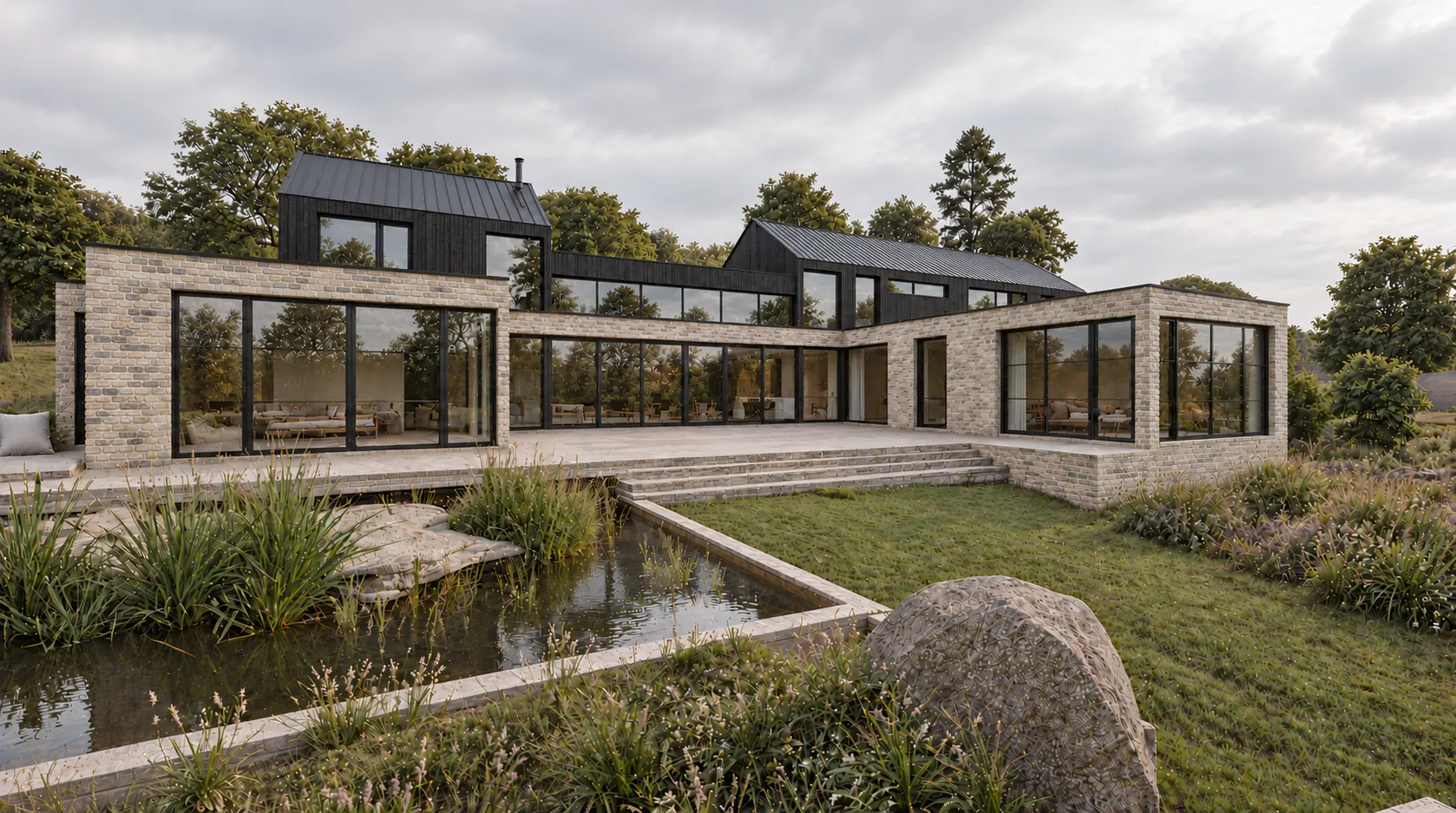
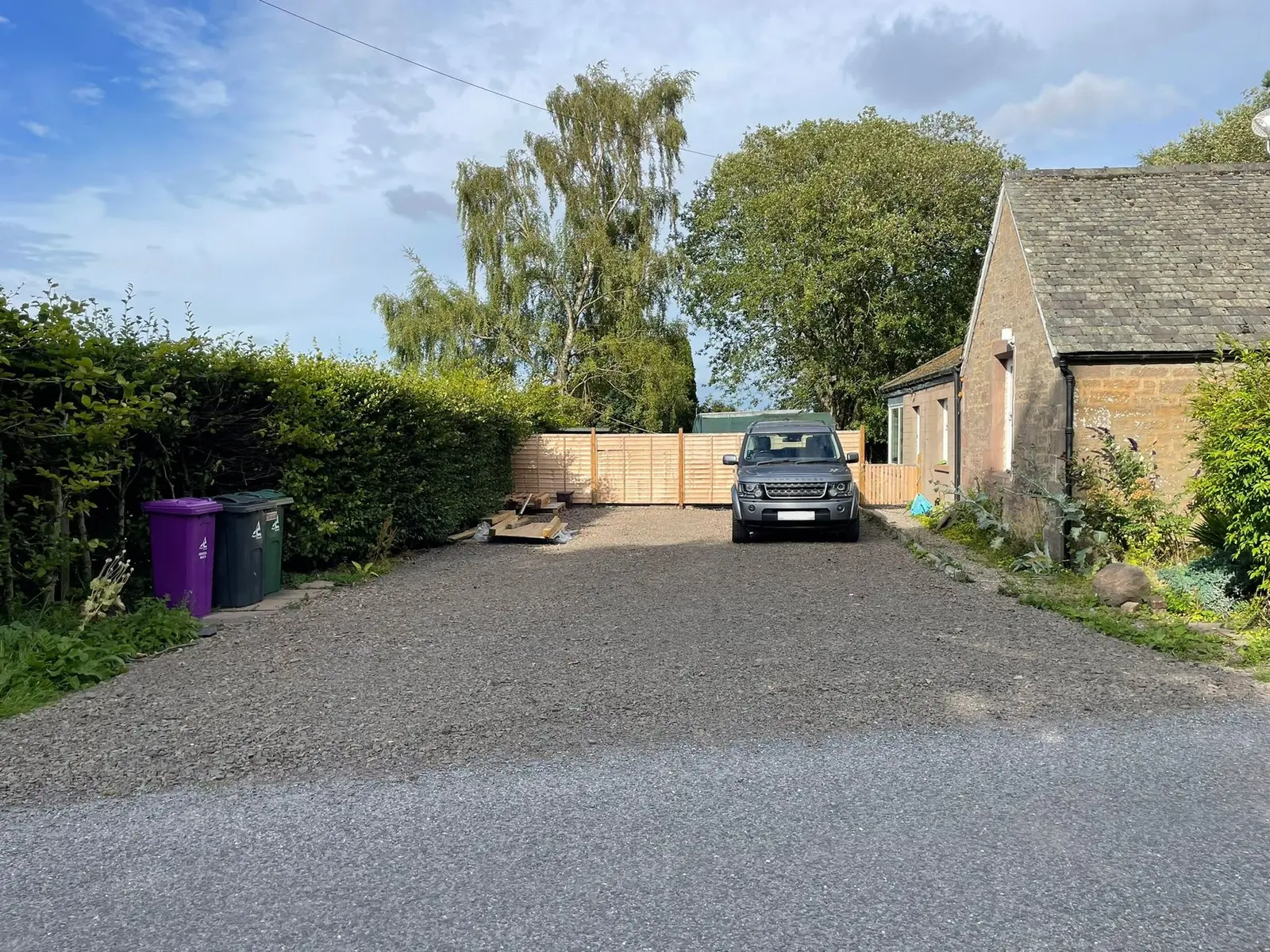
The best conversions keep the simple, robust character that makes steadings attractive: long roofs, solid walls with few openings, and the courtyard. Use existing openings where possible, keep new ones in proportion, group rooflights rather than scattering them, and put large areas of glass where they won't change the building's character from the road. Garden ground, parking and bins need as much thought as the building, because they are what make a steading look domestic.
Can you extend a steading as part of the conversion?
Often, within limits. Many councils accept a modest extension or link building where it is needed to make the conversion work, but resist extensions that are larger than the original or that change its character. Where a steading is too small or too fragile to convert without major additions, planners may treat the proposal as a new house in the countryside instead, which is judged against different policy. Discuss the scale of any extension at pre-application stage.
How we help
ED Design is an architectural design studio in Stirling. We survey and design conversions of traditional rural buildings, coordinate the structural, ecology and drainage surveys, and take projects through planning and the Building Warrant. See our self-build homes and replacement dwellings services and our work across Perth and Kinross.
Sources: Scottish Government: National Planning Framework 4; Stirling Council: planning guidance; NatureScot: standing advice for planning consultations, bats; Scottish Government and HES: Guide to Conversion of Traditional Buildings (August 2026); Building Standards Technical Handbook: standards applicable to conversions; New Build Heat Standard factsheet; HMRC: VAT refunds for conversions; Revenue Scotland: non-residential LBTT rates. Last reviewed November 2026.
Questions
Do I need planning permission to convert a steading in Scotland?
Yes. Converting a farm building to a house is a change of use. NPF4 supports re-using redundant rural buildings in principle, but the building must be capable of conversion and the design must suit its setting.
Do I need a bat survey for a barn conversion?
Usually. Bats are European protected species and often use traditional farm buildings. Surveys can only be done in the active season, roughly May to September, and works affecting a roost need a NatureScot licence.
What VAT do you pay on a steading conversion?
A builder can charge the reduced rate of 5% on a qualifying conversion to a home, and you can reclaim it, with the VAT on eligible materials, through HMRC's DIY Housebuilders Scheme for conversions.
Is a steading conversion cheaper than a new build?
Not necessarily. A sound building can be economical, but structural repairs, specialist trades and unknowns can make a conversion cost as much as, or more than, a new house. Get a structural survey and cost plan before buying.
General guidance for Scotland, not legal, tax, financial or planning advice for your project. Rules change, so check current official guidance and take advice specific to your site before acting.